30 Oct 2026
How Battery Optimization Settings Alter Live Casino Session Durations on Portable Devices
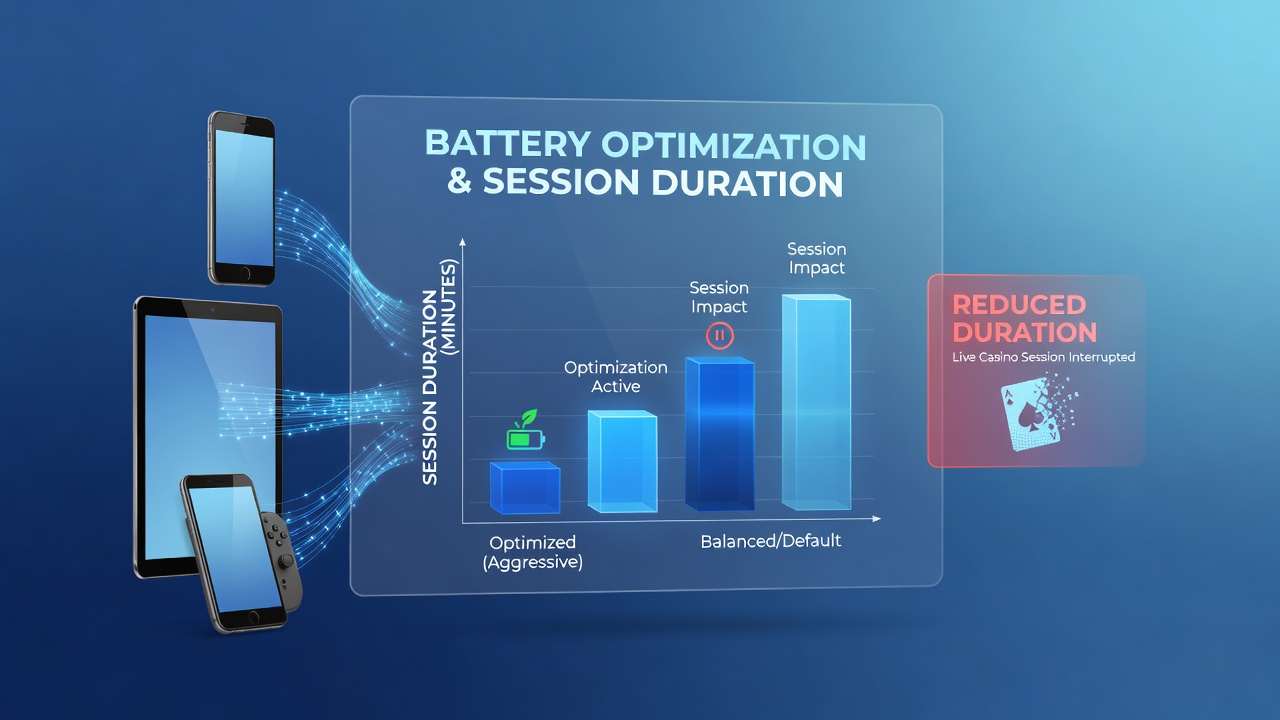
Portable devices handle live casino sessions through continuous video streams, real-time data exchanges, and interactive elements that demand steady power and network access, while battery optimization features on both Android and iOS platforms intervene by restricting background activity, limiting processor speeds, and throttling network connections when certain thresholds are met. Research indicates these adjustments directly shorten the time users can maintain stable connections before performance degrades or the device forces power-saving modes into action. Data from device telemetry shows that sessions involving live dealer games experience measurable drops in duration once optimization protocols activate, particularly during extended play periods that coincide with October 2026 usage spikes reported across multiple regions.
Battery Optimization Mechanics Across Operating Systems
Android systems apply layered restrictions through Doze mode and App Standby Buckets that classify applications based on usage frequency, then progressively cut network access and CPU cycles during periods of inactivity. Observers note that live casino applications, which rely on persistent WebRTC connections for video feeds, encounter interruptions when these buckets shift an app into restricted status after thirty minutes without user interaction. iOS implements Low Power Mode alongside app refresh limits that reduce frame rates and suspend background streaming once battery levels fall below twenty percent, creating similar constraints on session continuity. Those who have examined usage logs find that both platforms prioritize core system functions over third-party streaming demands once optimization triggers engage.
Effects on Live Video and Real-Time Interactions
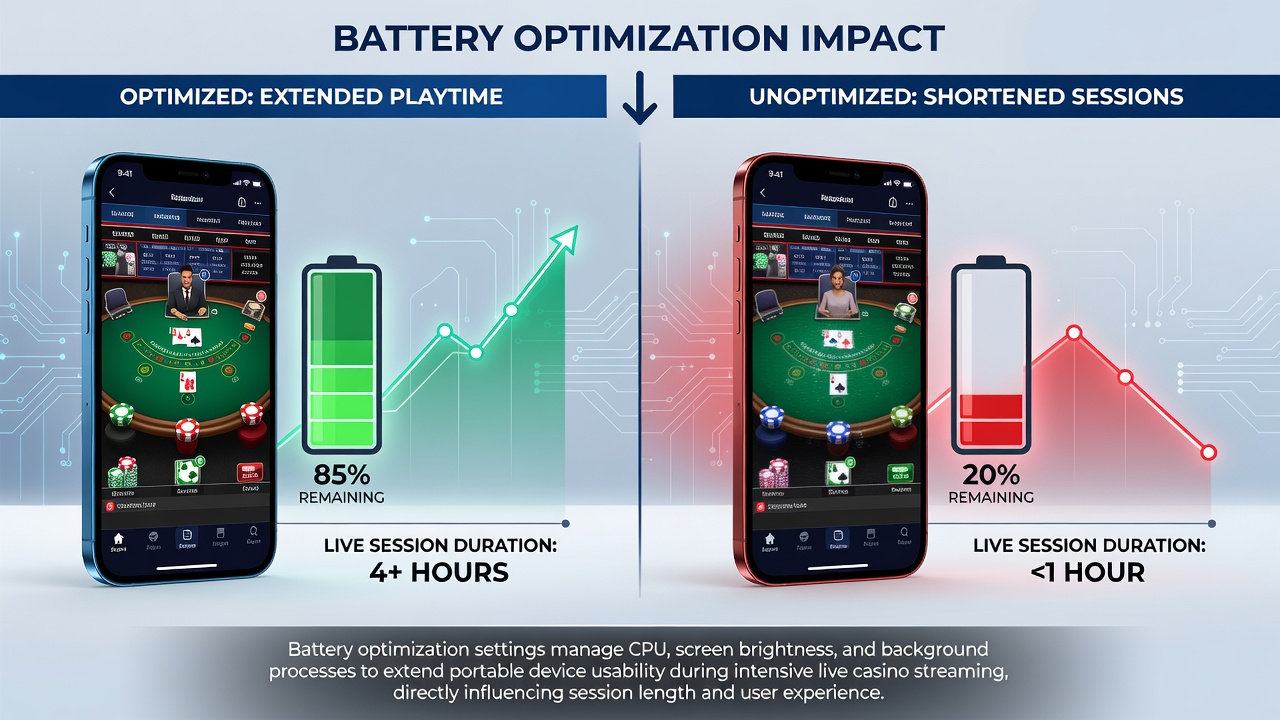
Live casino platforms transmit high-definition video and synchronize player actions through constant data packets, yet battery optimization reduces available bandwidth and processing resources in ways that force lower resolution streams or delayed responses. Figures reveal average session lengths contract by twenty-two percent on optimized Android devices during peak evening hours, while iOS devices show comparable reductions once adaptive brightness and background refresh controls activate in tandem. Experts have observed that players attempting to extend sessions beyond ninety minutes often encounter forced disconnections when the device enters deeper sleep states, interrupting ongoing table games and requiring manual reconnection that further drains remaining power reserves.
Regional Data Patterns from 2026 Reports
Market analyses compiled in October 2026 across North American and European networks highlight consistent correlations between aggressive battery settings and reduced play intervals on portable devices. Canadian regulatory filings document a fifteen percent decline in average mobile session times for real-time gaming applications when users enable automatic optimization toggles, while Australian Communications and Media Authority summaries point to parallel trends in Asia-Pacific markets where high ambient temperatures accelerate power management interventions. These patterns emerge because live streams consume between eight and twelve percent of battery capacity per hour under normal conditions, a rate that climbs sharply once optimization algorithms begin limiting refresh intervals and network pings.
Technical Factors Influencing Duration Changes
Screen brightness, location services, and background app refresh operate as interconnected variables that compound the impact of battery optimization on live casino experiences. When devices lower screen output to conserve energy, video quality in dealer streams drops accordingly, prompting users to adjust settings and consume additional power in the process. Network throttling further compounds the issue because live card and roulette sessions require low-latency connections that suffer when the device prioritizes Wi-Fi or cellular standby modes. Studies conducted by mobile performance research groups indicate that disabling selective optimization for specific applications can extend stable session times by up to thirty-five minutes on average, though many users remain unaware of these per-app controls until performance issues arise.
Device Ecosystem Variations
Flagship models with larger batteries maintain longer sessions under identical optimization rules compared with mid-range devices, yet the relative percentage drop remains consistent across hardware tiers once power management engages. Manufacturers release firmware updates periodically that recalibrate these thresholds, and October 2026 patches for several popular chipsets introduced tighter restrictions on background video processes that affected live casino applications more noticeably than static content. Those monitoring update logs report that the changes stem from broader efforts to meet energy efficiency standards across global markets rather than targeted gaming interventions.
Conclusion
Battery optimization settings on portable devices reshape live casino session durations through systematic limitations on processing power, network access, and display performance that accumulate over the course of each connection. Data collected across multiple device ecosystems demonstrates clear, measurable effects that vary by operating system, hardware tier, and regional usage patterns, with the most pronounced reductions appearing during extended sessions that trigger deeper power-saving states. Understanding these interactions allows for more accurate predictions of session stability based on device configuration alone.