16 Oct 2026
Biometric Verification Trends Reshaping Secure Access Protocols in Cross-Platform Casino Networks

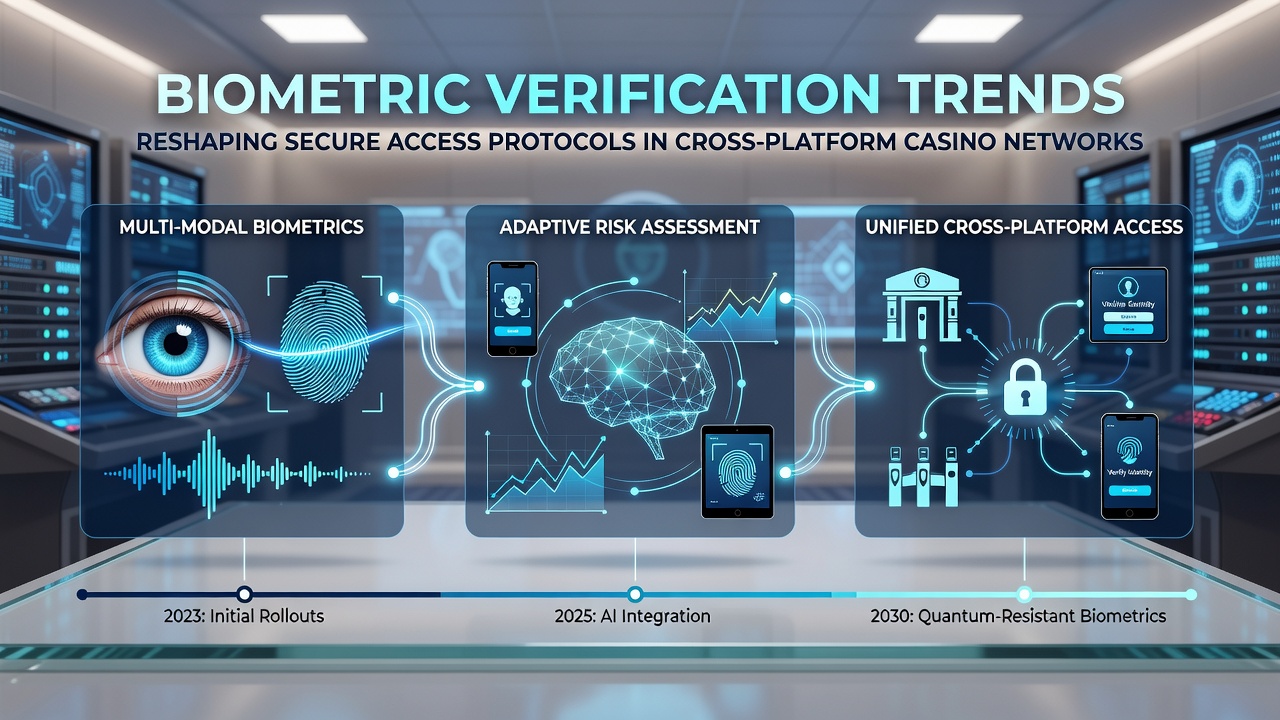
Biometric verification has moved from experimental pilots to standard practice across many cross-platform casino networks where operators manage access through desktop, mobile, and tablet interfaces simultaneously. Data from industry deployments in 2026 indicate that facial recognition combined with behavioral analytics now handles initial logins for over 40 percent of multi-device sessions, while fingerprint and voice pattern matching support secondary checks during high-value transactions. Observers note that these systems reduce reliance on traditional passwords and one-time codes, which often create friction when users switch between platforms mid-session.
Key Technologies Driving Adoption
Modern protocols rely on a layered approach that combines physiological traits with device-specific signals. Facial recognition systems capture multiple angles and liveness indicators to distinguish between live users and static images or deepfakes, while fingerprint scanners on mobile hardware provide quick re-authentication when a player moves from desktop to phone. Voice biometrics, though less common, appear in hands-free environments where operators integrate them with regional dialect databases to maintain accuracy across different accents and languages. Research indicates that combining two or more modalities lowers false acceptance rates below 0.1 percent in controlled tests conducted by several network operators.
Cross-Platform Synchronization Challenges
Ensuring consistent verification across ecosystems requires standardized data exchange formats and real-time synchronization between regional servers. When a player initiates a session on one device and switches to another, the system must transmit encrypted biometric templates without exposing raw data. In October 2026 several major networks reported latency reductions of up to 35 percent after adopting edge-computing nodes that process verification closer to the user location. Those improvements allow seamless continuation of play while meeting data residency rules in multiple jurisdictions.
Regulatory and Security Developments
Regulatory bodies in various regions have updated guidelines to address biometric data handling. The Nevada Gaming Control Board issued revised technical standards in mid-2026 that require operators to store templates in isolated environments separate from player financial records. Similar updates from the Alcohol and Gaming Commission of Ontario emphasize consent mechanisms and regular third-party audits. Industry reports from the European Gaming and Betting Association highlight that networks adopting these standards experienced fewer account takeover incidents compared with those relying solely on password-based systems. Gaming Standards Association documentation further details how encryption protocols must evolve alongside biometric algorithms to prevent template interception during cross-border transfers.
Observed Performance Metrics
Figures from operational networks show that biometric logins complete in an average of 1.8 seconds on mobile devices equipped with modern sensors, compared with 4.2 seconds for legacy multi-factor methods. Dropout rates during verification dropped by roughly 22 percent in the first half of 2026 according to aggregated platform statistics. Those who manage large-scale deployments note that behavioral biometrics, such as typing rhythm and swipe patterns, add an invisible layer that flags anomalies without additional user action. This continuous monitoring proves especially useful in environments where players access accounts from multiple locations within short timeframes.
Integration with Existing Infrastructure
Many operators now embed biometric checks into unified player accounts that span desktop clients, native apps, and browser-based platforms. API frameworks allow third-party game providers to request verification status without receiving the underlying biometric data, which helps maintain compliance. Case examples from networks operating in both North America and Australia demonstrate that phased rollouts, beginning with high-value accounts and expanding to all users, minimize disruption while building confidence in the new protocols. Hardware manufacturers have responded by embedding more secure biometric sensors directly into consumer devices, reducing the need for separate verification hardware at the operator level.
Conclusion
Biometric verification continues to redefine how cross-platform casino networks manage secure access, supported by measurable reductions in fraud incidents and improved session continuity across devices. Ongoing refinements in template protection, regulatory alignment, and hardware integration shape the pace of further adoption through late 2026 and beyond.